Rosalind Franklin
1920 – 1958
Who was Rosalind Franklin?
Rosalind Franklin (1920–1958) was an English chemist and X-ray crystallographer. Her X-ray images of DNA, especially 'Photo 51', were key to discovering the double helix structure, though she received little credit during her lifetime.
Key Achievement
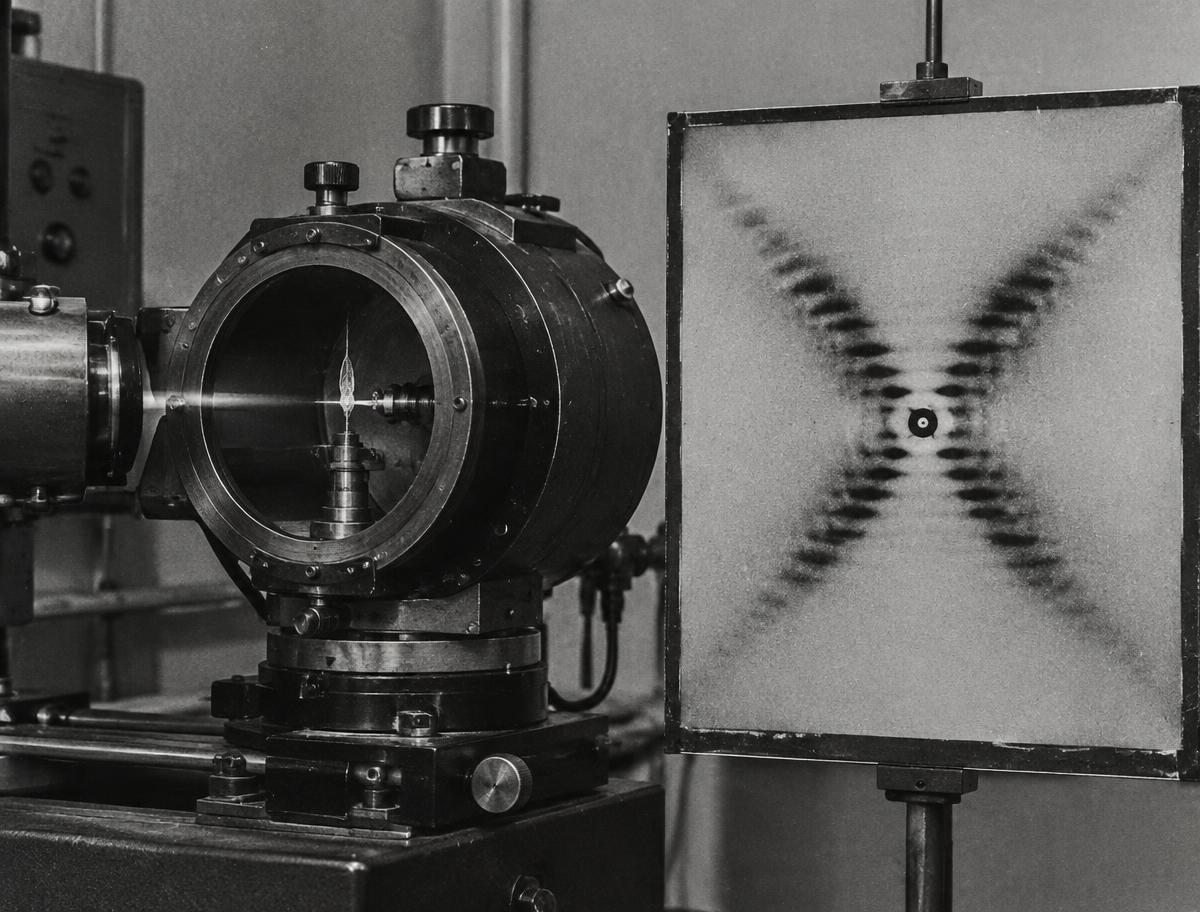
Produced the X-ray diffraction image that revealed DNA's double helix structure
Her story
Rosalind Franklin was a British chemist and X-ray crystallographer whose work was central to understanding the molecular structures of DNA, RNA, viruses, coal, and graphite. Born in London to an affluent and influential family, she excelled in science from an early age, despite her father's initial opposition to her attending university.
Franklin's famous "Photo 51" - an X-ray diffraction image of DNA - provided crucial evidence for the double helix structure of DNA. Her data was shown to James Watson and Francis Crick without her knowledge or permission, contributing significantly to their Nobel Prize-winning model of DNA structure. Tragically, Franklin was never credited for this work during her lifetime.
Beyond DNA, Franklin made significant contributions to understanding the structure of viruses and coal. Her meticulous approach to research and her ability to extract meaningful data from X-ray crystallography images were unmatched. She was known for her precise, careful work and her insistence on drawing conclusions only from solid evidence.
Franklin died of ovarian cancer at age 37, likely caused by exposure to X-ray radiation during her research. Her contributions to science were finally recognized decades after her death, and she is now celebrated as a pioneering scientist who advanced our understanding of life at the molecular level despite facing significant gender discrimination in her field.
Questions people ask about Rosalind Franklin
What did Rosalind Franklin discover?
Her X-ray diffraction work showed DNA's helical form and dimensions. Her 'Photo 51', taken with student Raymond Gosling in 1952, gave crucial evidence for the double helix.
Did Rosalind Franklin get credit for DNA?
Not fully. Watson and Crick saw her data without her knowledge, and when they shared the 1962 Nobel Prize with Maurice Wilkins, she had already died. Nobel Prizes are not given after death.
How did Rosalind Franklin die?
She died of ovarian cancer in 1958, aged 37. Exposure to X-ray radiation is sometimes suggested as a possible factor, but this is not proven.
What else did Rosalind Franklin research?
She did important work on the structure of coal and graphite, and later on viruses, including the tobacco mosaic virus and polio.
Sources & further reading
More remarkable women