Chien-Shiung Wu
1912 – 1997
Who was Chien-Shiung Wu?
Chien-Shiung Wu (1912–1997) was a Chinese-American experimental physicist. Her 1956 'Wu experiment' proved that the law of conservation of parity does not hold for the weak nuclear force, a discovery that won her colleagues the Nobel Prize.
Key Achievement
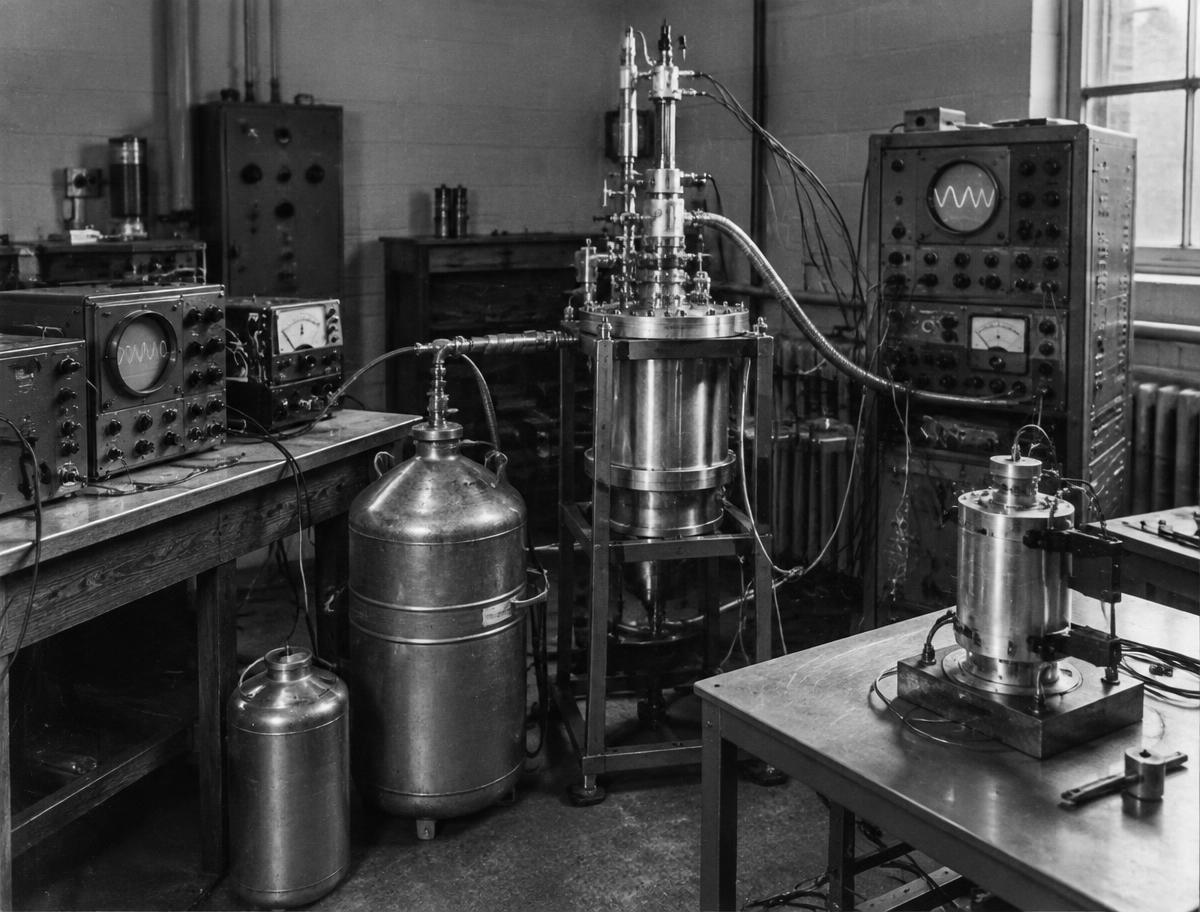
Conducted the experiment that disproved the law of conservation of parity in physics
Her story
Chien-Shiung Wu was a Chinese-American experimental physicist who made significant contributions to nuclear physics. Born in Liuhe, China, she attended the best schools despite the limited educational opportunities for girls at the time. Her exceptional talent led her to study physics at National Central University before coming to the United States for graduate studies.
Wu's most famous contribution was an experiment in 1956 that disproved the law of conservation of parity, a fundamental principle that physicists had believed for over thirty years. This groundbreaking experiment confirmed theoretical predictions by Tsung-Dao Lee and Chen-Ning Yang, who subsequently won the Nobel Prize in Physics in 1957. Controversially, Wu was not included in the award despite conducting the crucial experimental verification.
Throughout her career, Wu worked on the Manhattan Project, developing the process for separating uranium isotopes, and made numerous other contributions to particle and nuclear physics. She was known for her meticulous experimental techniques and her ability to conduct experiments that others thought impossible. Her colleagues called her the "First Lady of Physics" and the "Chinese Marie Curie."
Wu received numerous honors throughout her career, including the National Medal of Science and election to the National Academy of Sciences - the first woman to receive this honor in the physical sciences. She continued to advocate for women in science and education until her death in 1997 at age 84. Her legacy serves as a reminder that scientific recognition is not always fairly distributed, and that groundbreaking work can come from those society might overlook.
Questions people ask about Chien-Shiung Wu
What did Chien-Shiung Wu discover?
In 1956 she showed experimentally, using cooled cobalt-60, that nature distinguishes between left and right in weak nuclear interactions. This overturned the long-held law of conservation of parity.
Did Chien-Shiung Wu win a Nobel Prize?
No. Tsung-Dao Lee and Chen-Ning Yang received the 1957 Nobel Prize in Physics for the theory her experiment confirmed, and her exclusion is widely seen as an oversight. She later received the first Wolf Prize in Physics in 1978.
What was Chien-Shiung Wu's nickname?
She is often called the 'First Lady of Physics' and the 'Chinese Madame Curie'.
Did Chien-Shiung Wu work on the Manhattan Project?
Yes. She joined the Manhattan Project at Columbia University, where she helped develop a process for enriching uranium and improved radiation detectors.
Sources & further reading
More remarkable women