Ada Lovelace
1815 – 1852
Who was Ada Lovelace?
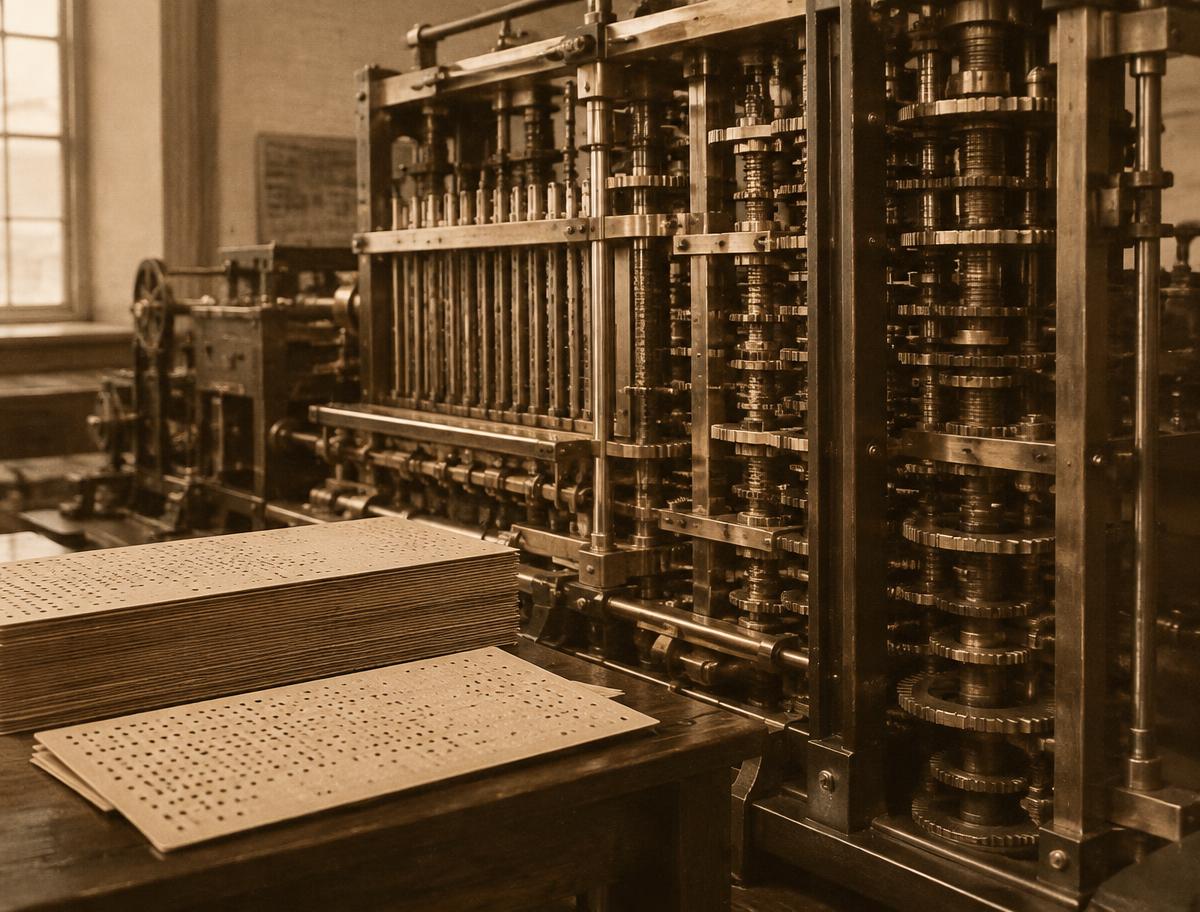
Ada Lovelace (1815–1852) was an English mathematician who wrote what is widely regarded as the first computer program. Working with Charles Babbage on his proposed Analytical Engine, she published an algorithm to calculate Bernoulli numbers in 1843 and foresaw that computers could do far more than arithmetic.
Key Achievement
Created the first computer algorithm and envisioned the future potential of computing machines
Her story
Ada Lovelace, born Augusta Ada Byron, was an English mathematician and writer, chiefly known for her work on Charles Babbage's proposed mechanical general-purpose computer, the Analytical Engine. As the daughter of the poet Lord Byron and mathematician Anne Isabella Milbanke, she inherited a unique combination of poetic imagination and mathematical precision.
In 1843, Lovelace translated an article about the Analytical Engine and added extensive notes of her own, which were three times longer than the original article. In these notes, she described an algorithm for the Engine to compute Bernoulli numbers, which is considered the first computer program ever published. More remarkably, she was the first to recognize that the machine had applications beyond pure calculation.
Lovelace envisioned a future where computers could create music and art, not just perform mathematical calculations - a vision that seemed fantastical in the 1840s but proved prophetic. She understood that numbers could represent more than just quantities; they could represent relationships, symbols, and instructions. This conceptual leap was revolutionary and demonstrated her profound insight into the potential of computing.
Struggling with illness throughout her life, Lovelace died of uterine cancer at age 36, the same age as her father. For over a century, her contributions were largely forgotten or attributed to others. Today, she is celebrated as a visionary who foresaw the computer age and is honored annually on Ada Lovelace Day, which celebrates the achievements of women in STEM fields.
Questions people ask about Ada Lovelace
What did Ada Lovelace invent?
Ada Lovelace did not build a machine, but in 1843 she published the first algorithm intended to be carried out by a machine, Charles Babbage's Analytical Engine. For this she is often called the first computer programmer.
Why is Ada Lovelace important?
She was the first to see that a computing machine could manipulate symbols such as music or letters, not just numbers. That idea anticipated modern general-purpose computing by about a century.
Who was Ada Lovelace's father?
Her father was the poet Lord Byron. Her parents separated shortly after her birth, and her mother encouraged her to study mathematics and logic.
What is Ada Lovelace Day?
Ada Lovelace Day is held on the second Tuesday of October each year. It celebrates the achievements of women in science, technology, engineering and maths.
Sources & further reading
More remarkable women