Mary Anning
1799 – 1847
Who was Mary Anning?
Mary Anning (1799–1847) was an English fossil collector and palaeontologist from Lyme Regis. Her discoveries, including the first correctly identified ichthyosaur skeleton and the first complete plesiosaurs, helped change scientific thinking about prehistoric life and extinction.
Key Achievement
Discovered groundbreaking fossils that changed scientific understanding of prehistoric life and extinction
Her story
Mary Anning was a British fossil collector and paleontologist who became known for her important finds in the Jurassic marine fossil beds of Lyme Regis in Dorset. Born into a poor family, she began collecting fossils as a child to help support her family after her father's death. Her discoveries would fundamentally change the understanding of prehistoric life and Earth's history.
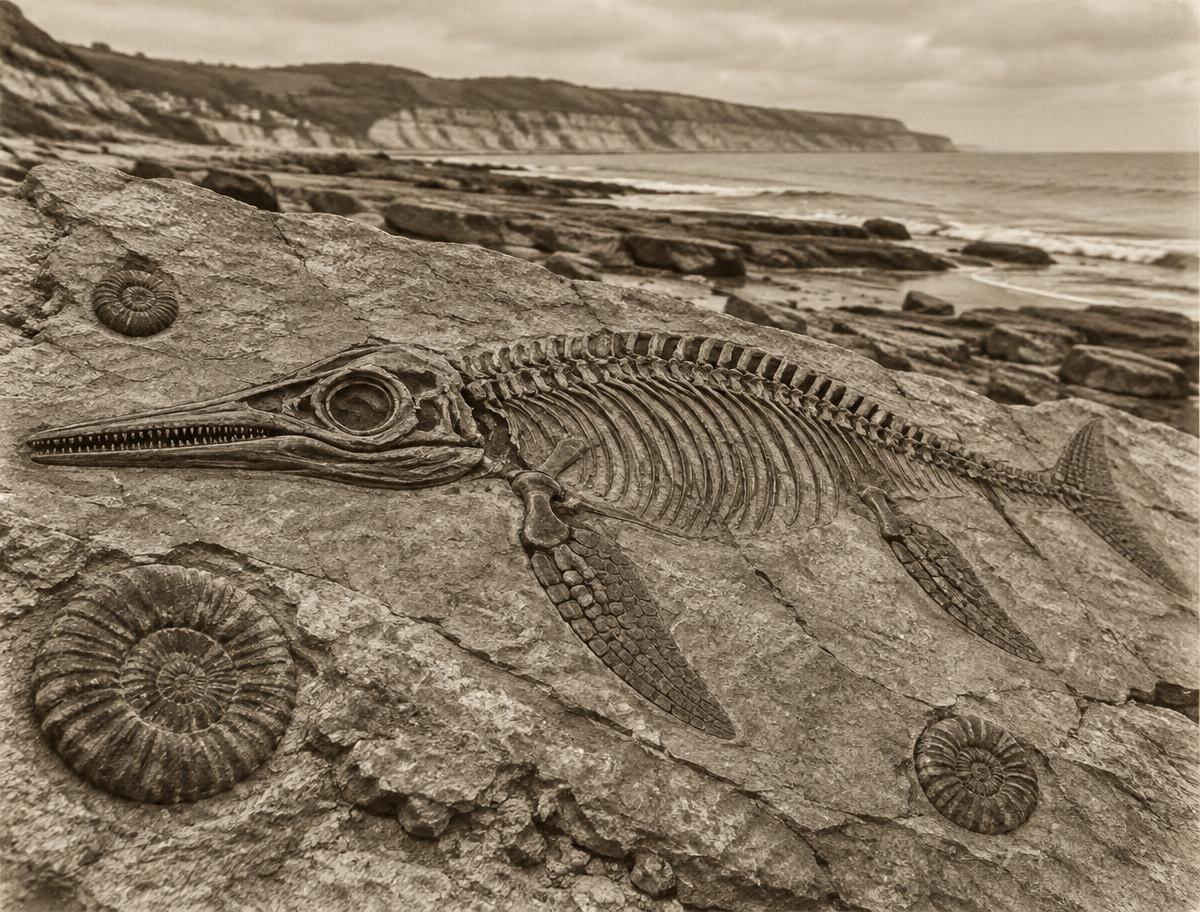
At age 12, Anning discovered the first correctly identified ichthyosaur skeleton, a prehistoric marine reptile. Over her career, she discovered the first two plesiosaur skeletons, the first pterosaur skeleton found outside Germany, and important fish fossils. Her careful observations and illustrations of fossils were meticulous and groundbreaking.
Despite her significant contributions, Anning faced numerous obstacles. As a woman, she was not allowed to join the Geological Society of London and rarely received full credit for her discoveries. Wealthy male collectors and scientists often purchased her finds and published papers without acknowledging her expertise, even though many consulted her for her unparalleled knowledge.
Anning died of breast cancer at age 47, having gained some recognition in the scientific community but never achieving the fame her discoveries deserved. Today, she is recognized as one of the most important fossil hunters in history, and her story exemplifies the often-overlooked contributions of women to scientific advancement.
Questions people ask about Mary Anning
What did Mary Anning discover?
As a girl, with her brother Joseph, she found the first ichthyosaur skeleton to be correctly identified. She later found the first complete plesiosaur skeletons and a pterosaur in Britain.
Why was Mary Anning not recognised in her time?
As a working-class woman she could not join the Geological Society of London. Male scientists often published her finds without crediting her.
Is 'she sells seashells by the seashore' about Mary Anning?
It is often said to be inspired by her, but that connection is not proven.
How is Mary Anning remembered today?
In 2010 the Royal Society named her one of the ten British women who most influenced the history of science. A statue of her was unveiled in Lyme Regis in 2022.
Sources & further reading
More remarkable women